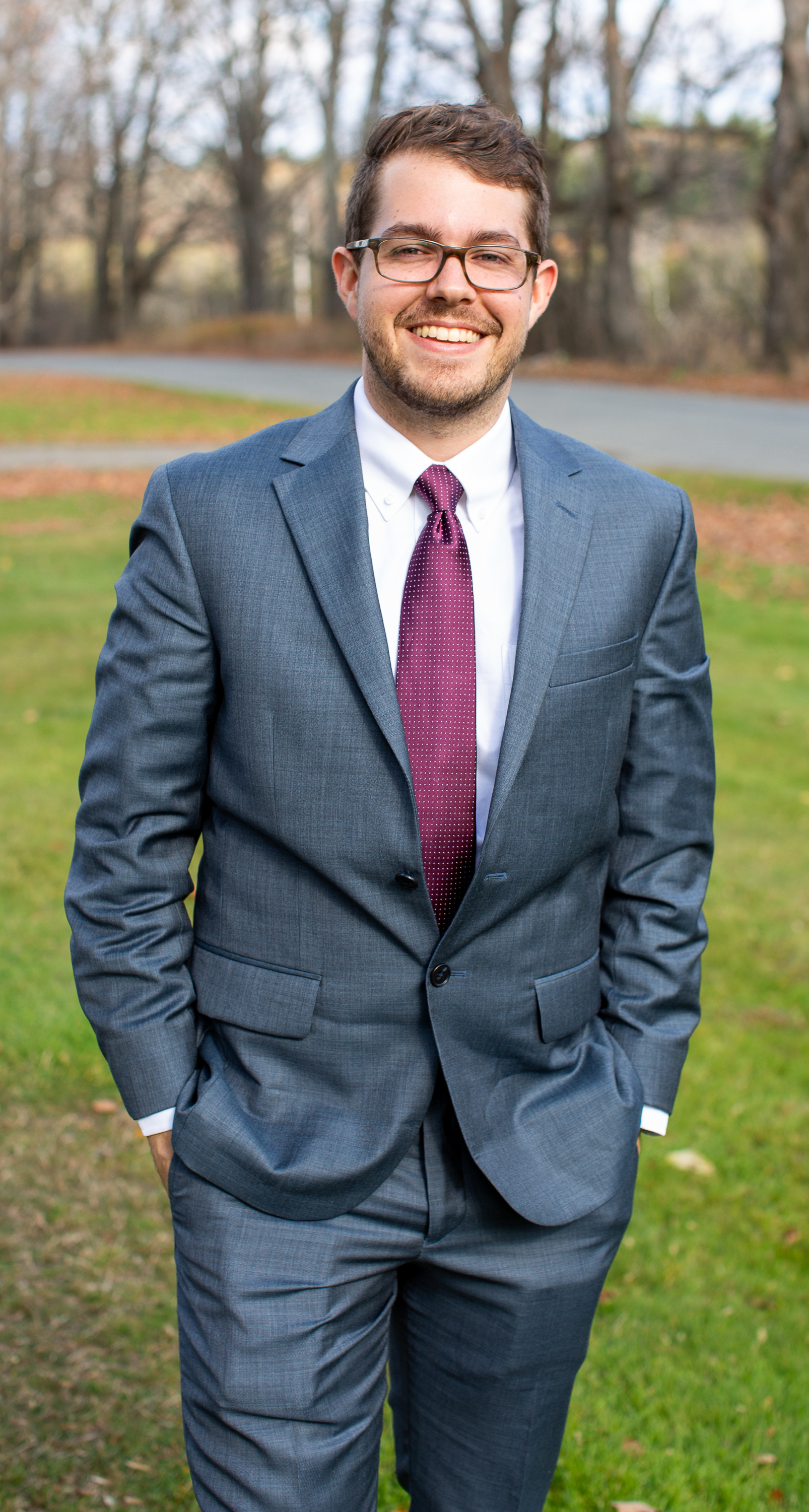
Sean Sinclair
Sean Sinclair is an Assistant Professor at Northwestern University in the Industrial Engineering and Management Sciences department. His research focuses on developing algorithms for data-driven sequential decision making in societal applications.
His teaching-focused work emphasizes graduate student mentoring and helping undergraduate students connect technical topics to real-world
impact through IEMS 365: Analytics for Social Good.
Before returning to graduate school, he spent two and a half years teaching mathematics, science, and
English in rural Ghana with the Peace Corps, an experience that continues to shape his approach to inclusive
participation, project-based learning, and classroom community.
[website]
Impact on Teaching Statement
My Searle Fellows work sharpened the difference between my earlier teaching philosophy and the practices I now want to foreground through my teaching practice. The older statement emphasized social context and classroom trust. The updated statement keeps those commitments while adding more deliberate rituals and classroom assessment techniques that support collective learning.
Old Teaching Philosophy
Incorporating Social Issues in Technical Courses
My earlier teaching philosophy focused on integrating social issues into technical courses. In IEMS 365: Analytics for Social Good, for example, students use analytics to examine questions such as bias in AI, fairness in model design, and the organizational constraints faced by public-interest partners. The goal is to show how technical topics in industrial engineering can be appplied to public-sector problems.
Creating a Comfortable Risk-Taking Atmosphere
I also emphasized creating a classroom atmosphere where students feel comfortable taking intellectual risks. Students learn more deeply when they can ask incomplete questions, test possible explanations, disagree constructively, and make mistakes without feeling that one wrong answer will define their standing in the class.
Updated Teaching Philosophy
My updated teaching philosophy places greater emphasis on the rituals that make collective learning possible. Predictable routines help students know how to enter a discussion, how to listen to peers, and how to connect one class meeting to the next. These rituals are especially important in project-based and discussion-based courses, where the students themselves becomes part of the course infrastructure.
I now also think more explicitly about classroom assessment techniques as part of the learning process. Rather than treating assessment only as a summative endpoint, I use low-stakes prompts, check-ins, reflection questions, and student-generated exam questions to make student understanding visible throughout the course. Asking students to write their own exam questions, for example, helps them identify what matters, anticipate how concepts can be tested, and practice the judgment needed to separate whether they have a surface familiarity or a deep understanding of a topic.
Summary of Project: IEMS 496 Academic Street Smarts
This portfolio centers on the creation of IEMS 496: Academic Street Smarts, a Winter 2026 professional development course for Northwestern IEMS PhD students.
Need and Goal
The motivating premise behind the course is that many PhD students are expected to master the academic system and associated professional skills without ever being explicitly taught them. Academic Street Smarts addresses that gap by treating the hidden curriculum as something that should be revealed, discussed, and practiced rather than left invisible.
The course format was built around weekly discussion-based sessions, guest speakers from faculty and senior PhD students, and practical conversation about how academic life works beyond the formal curriculum.
- 1-credit seminar format
- weekly discussion sessions
- guest speakers from faculty and senior PhD students
- practice around presentation, communication, and professional judgment
Before-and-after survey responses show both the initial gap and the gains students reported after the course. The largest improvements appeared in job-market knowledge and finding fellowships or grants.
Students began with low confidence in several hidden-curriculum topics and ended the course reporting substantial improvements across every measured area.
Scale shown here: 1 = not knowledgeable, 5 = confident.
Course Description
The series is aimed at first-year PhD students in IEMS and focuses on balancing research, teaching, and service; understanding the publication process; and building the soft skills essential for a successful academic career. Sessions are conversational and led by a mix of senior PhD students and faculty.
Although the primary audience is first-year students, later-year PhD students are also invited. The longer-term goal is to offer the series annually so that each incoming cohort receives consistent guidance while strengthening the department's culture of community and professional development.
Seminar Reflection Component
For sessions that immediately follow a seminar presentation, the first 15 minutes are reserved for discussion of the seminar itself. These conversations focus on:
- the content and presentation style of the talk,
- potential future research directions and open questions, and
- lessons about effective communication and framing of research.
Syllabus Topics
The course is organized around guided conversations rather than formal lectures. The topics below reflect the Winter 2026 syllabus.
Orientation and Seminar Listening
Introduces community norms, expectations for discussion, and strategies for getting more out of research seminars.
- open communication norms and shared expectations,
- how to listen to a research talk, and
- completion of pre-surveys.
Advice to a First-Year PhD, Part I
Conversation led by two second-year PhD students on early program navigation.
- core courses, funding conversations, and work-life balance,
- reaching out to potential advisors, and
- expectations around candidacy and early research progress.
Advice to a First-Year PhD, Part II
Conversation led by senior PhD students on later-stage decisions in the program.
- prospectus expectations and research output timelines,
- conference participation and external collaborations, and
- co-advising, course selection, and common regrets.
Internships and Research Labs
Explores summer opportunities and industry-facing professional development.
- industry internships, research labs, and research visits,
- job-market preparation after graduation, and
- networking through conferences and the INFORMS community.
Research Landscape and Academic Communities
Discusses how students situate their work within research fields and professional communities.
- journals versus conferences and building collaborations,
- how to identify promising dissertation-scale problems, and
- navigating prestige, research taste, and reviewer feedback.
Grants, Funding, and Fellowships
Focuses on how PhD students think about financial support and opportunity structures.
- fellowship opportunities and application strategy,
- grant and funding structures for PhD students, and
- the distinction between RA and TA support.
Publishing Steps and Reviewing
Covers the mechanics and judgment involved in publishing research.
- journal versus conference submission processes,
- revisions, resubmissions, and handling critical reviews, and
- writing and positioning research effectively.
Academic Job Market and Department Types
Examines different academic career paths and what departments value in candidates.
- tenure-track versus teaching-track roles,
- differences across departments such as ECE, CS, OR, and business schools, and
- how to think about fit, affinity, and placement strengths.